
When I first started looking at renewable energy in Monaco and the French Riviera, the opportunity felt oddly invisible. The projects were small on the map, yet the capital around them was huge. Something did not match.
Most conversations I heard focused on big solar farms or offshore wind, which this coastline barely hosts. The real story sat inside buildings, parking lots, and seawater loops.
Renewable energy investment across this region, as I see it now, sits where legal structures, funding applications, project pipelines, and very specific local constraints meet. What follows is my attempt to lay out that picture: the policy goals in the Principality, the mature but still expanding French Riviera market, the existing structures that shape deals, and the role Monaco Business Angels plays in turning this into a practical investment field.
If that sounds close to where your own research is heading, the next sections add the detail behind it.
Key Takeaways
When I pulled my notes together, a few themes came up again and again. These are the ideas that now guide how I look at legal structures, funding applications, and project pipelines across the Principality and the French Riviera.
Monaco functions as a dense urban energy services market rather than a classic renewable generation market. The investable work sits on rooftops, in plant rooms, and inside seawater heat pump networks instead of on open land. For capital, the interesting plays rely on building owners and utility interfaces, not on wholesale power sales.
The French Riviera around Nice, Antibes, and Cannes already carries a large base of solar and hydro projects. According to data from RTE, the Provence-Alpes-Côte d’Azur region hosts about 6.25 GW of renewable capacity, including around 2.6 GW of solar and 3.2 GW of hydro. That scale creates both competition and a clear benchmark for new rooftop, parking canopy, and storage projects.
Legal frameworks in Monaco and France matter before any term sheet moves. Monaco pushes everything through building rules, urban planning, and SMEG grid conventions, while France relies on SAS companies and a growing body of transparency rules for structured funding. Ignoring that difference is the fastest way to slow a project.
Monaco Business Angels gives this regional opportunity a verified front door. The network connects high-net-worth investors, family offices, and early-stage founders inside a KYC-compliant framework that already understands the regulatory tangle between Monaco and France. That saves independent investors from recreating the same legal and due diligence work on their own.
The most realistic near-term plays are specific rather than heroic. In my notes, the same items keep returning: rooftop PV portfolios, car park solar canopies, seawater loop retrofits, behind-the-meter batteries, and building electrification with grant support. Those may not be headline-grabbing megaprojects, but they line up with local rules, subsidy schemes, and existing structures.
What Makes Monaco And The French Riviera An Attractive Renewable Energy Market Right Now
Monaco and the French Riviera form an attractive renewable energy market because policy pressure, existing infrastructure, and concentrated wealth now point in the same direction. For an angel investor or family office, that combination means real demand, visible projects, and capital ready to move.
On the Monaco side, the government has set clear climate targets. According to the Government of Monaco, the Principality aims for a 55 percent cut in territorial greenhouse gas emissions by 2030 compared with 1990 levels, a 10 percent cut in energy intensity, and carbon neutrality by 2050. Those goals push every new project toward efficiency, rooftop solar, and low-carbon heating and cooling — a pattern consistent with research on high-ambition climate action in all sectors that models deep territorial emissions cuts by 2035.
At the same time, the French Riviera is not a blank slate. RTE reports that regional electricity use in Provence-Alpes-Côte d’Azur reached about 39.5 TWh in 2024, with production of 19.2 TWh and around 6.25 GW of renewable capacity already installed. That includes roughly 2.6 GW of solar and 3.2 GW of hydro, which signals a mature grid that still needs more clean supply and flexibility.
To keep my own thinking straight, I started to summarise the geography like this:
| Area | Best Fit Focus | Key Reason |
|---|---|---|
| Monaco urban core | Rooftop PV, seawater loops, building upgrades | Tiny territory and strict marine and heritage protection |
| Nice–Cannes seafront | Rooftop and parking solar, thalassothermy, storage | Large cooling loads and premium hotel and retail stock |
| Inland Riviera and brownfield sites | Ground PV, canopy solar, storage | National rules steer PV toward artificial land and parking areas |
This table matches the picture in the reference work on Monaco and the Riviera, and it fits what I see from project teasers and public documents. It also matches the type of climate-tech and environmental deals surfacing through Monaco Business Angels, where investors are already used to long asset lives and regulated revenue.
Understanding The Legal And Regulatory Structures Governing Renewable Investment In The Region

The legal and regulatory structures that shape renewable investment in Monaco and the French Riviera sit at two levels. In Monaco, rules focus on buildings, urban form, and the SMEG grid, while in France they turn around company form, financial law, and national energy policy.
In the Principality, the Mission pour la Transition Énergétique runs the Climate-Air-Energy Plan and an environmental code that pushes developers toward energy efficiency and more renewable supply. The RE2018 building energy regime and the BD2M sustainable building framework sit on top of this strategy. Public documents from the Mission pour la Transition Énergétique show strong emphasis on retrofits, rooftops, and seawater heat pump loops in districts like Condamine and Larvotto.
Solar permits show how different Monaco feels from many French towns. Rooftop PV is usually treated as an urban planning file. The BATI2 form for modifying existing buildings asks for photovoltaic surface area, and the permit guidance requires a technical dossier and architect-signed plans submitted to the Direction de la Prospective, de l’Urbanisme et de la Mobilité. SMEG, the utility based on avenue de Fontvieille, then controls grid conventions, metering, and tariffs, including a published schedule for PV auto-invoicing and purchase of excess power.
On the French side, the structuring questions move from rooftops to corporate forms and financial law. The Société par Actions Simplifiée, or SAS, dominates renewable ventures because it allows flexible shareholder agreements, multiple share classes, and convertible instruments. For cross-border investors, holdings often sit in a Monaco or French vehicle, while operating assets use local SAS companies.
Regulation of funding structures is also tightening. France’s Law No. 2025-391 and Decree No. 2025-1191, effective from 2026, formally recognize third-party funding actors in collective actions and impose transparency, governance, and disclosure rules. Research from the European Commission on representative actions highlights the same themes of funder identification and conflict management. Even though these texts focus on litigation, the direction is clear for renewable deals that rely on structured funding or cross-border co-investment — a challenge that also surfaces in discussions of fisheries management and biodiversity conservation where multi-jurisdictional policy coherence proves similarly difficult to achieve.
For anyone working with Monaco Business Angels, this legal backdrop is not theory. It shapes how term sheets are written, how KYC checks are handled, and how co-investment agreements bridge Monegasque civil law and French commercial law.
Mapping The Investment Pipeline Where The Real Opportunities Are Opening Up
When I started to map the actual investment pipeline, the picture became more concrete. Monaco does not offer greenfield wind or utility-scale solar, while the French Riviera offers those only in very specific inland or offshore zones. The realistic pipeline clusters around a handful of repeatable project types.
In Monaco, four archetypes stand out:
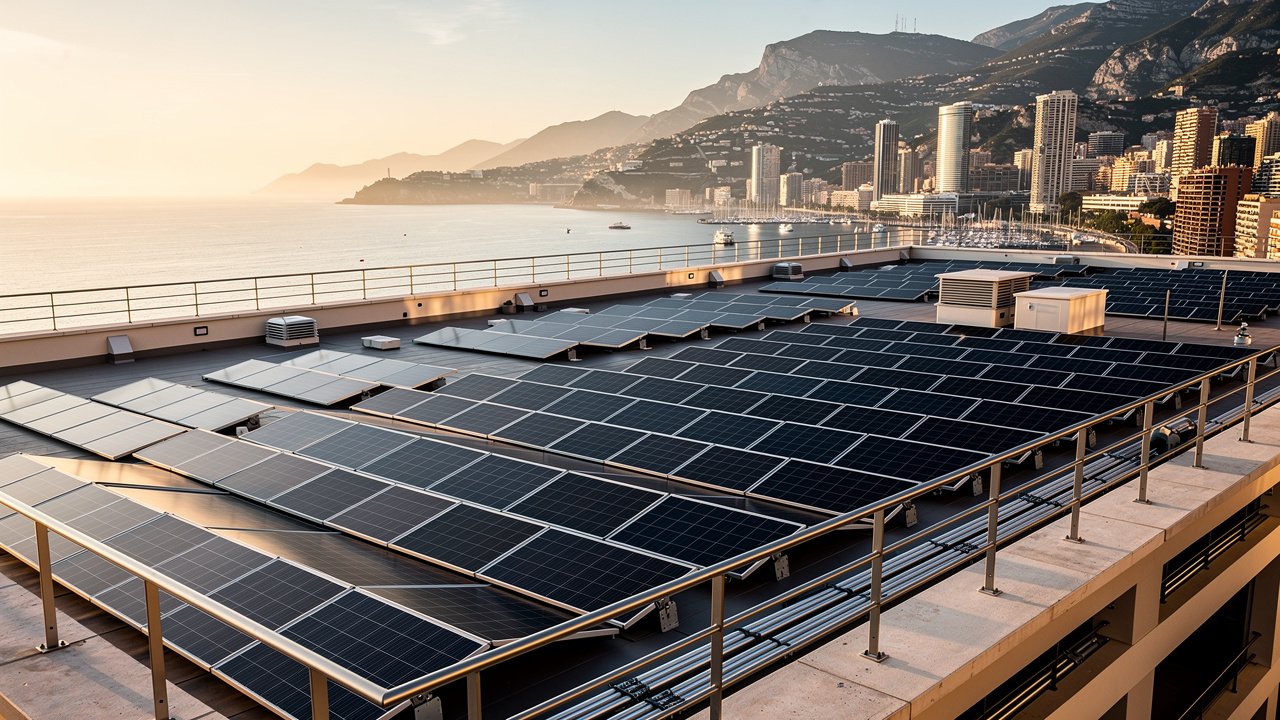
Rooftop PV portfolios on residential and commercial buildings tie together self-consumption, SMEG purchase of surplus power, and subsidy support from the 2021 environmental code amendments. The business case depends on careful sizing, meter architecture, and the aid scheme for photovoltaic production described in public documents. According to the Government of Monaco’s climate reporting, the share of renewables in delivered energy keeps rising, which supports this model.
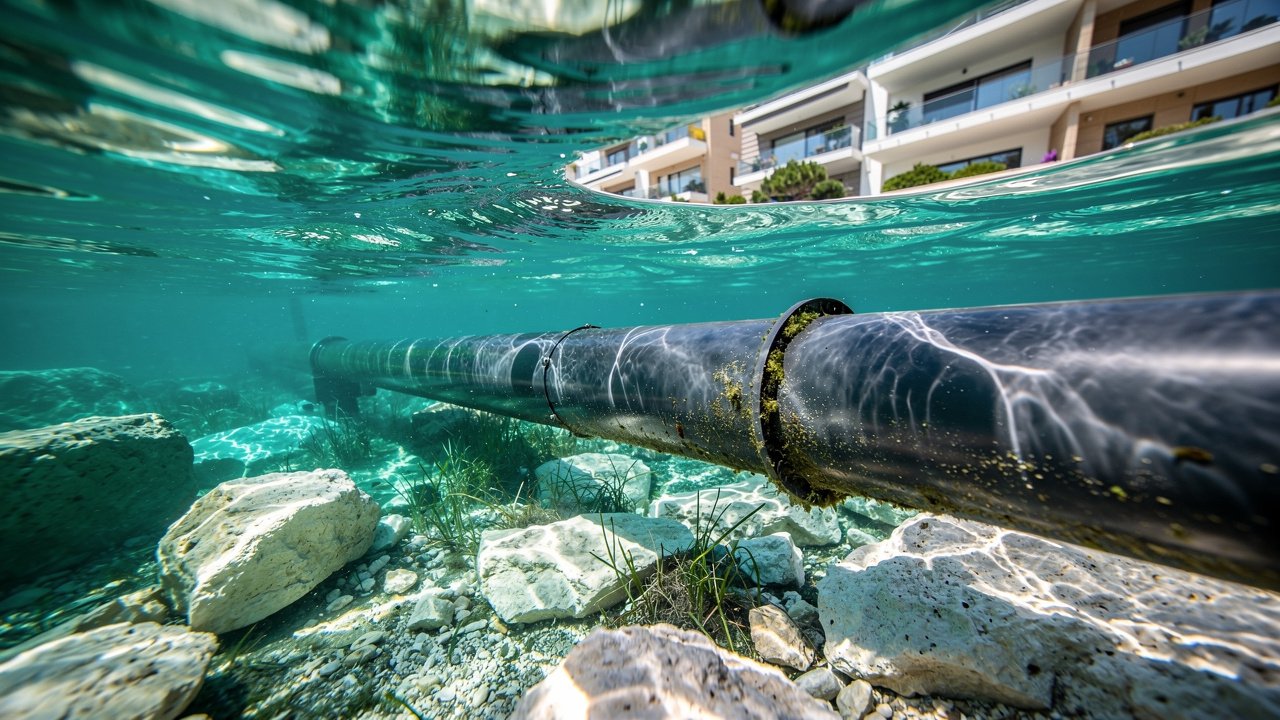
Seawater heat pump loops in districts such as Condamine and Larvotto extend Monaco’s long history with thalassothermy. Official reports highlight these loops as flagship local renewable systems, since they turn the Mediterranean into a low-temperature energy source. New branches or building connections to these loops create long-lived, infrastructure-style cash flows.
Behind-the-meter battery storage starts to pair with rooftop PV and peak demand charges. Although Monaco is small, dense commercial loads and high power quality expectations create a case for batteries that reduce peaks and help buildings chase lower tariffs. These projects often sit inside broader electrical upgrades, not as stand-alone assets.
Building electrification and efficiency retrofits qualify for Mission pour la Transition Énergétique grants. The subsidy portal lists support for audits, insulation, and collective heat pumps that replace boiler systems. The numbers are project-specific, yet the pattern is the same: a stack of capital expenditure, grants, and long-term energy savings.
Across the French Riviera, the pipeline widens:
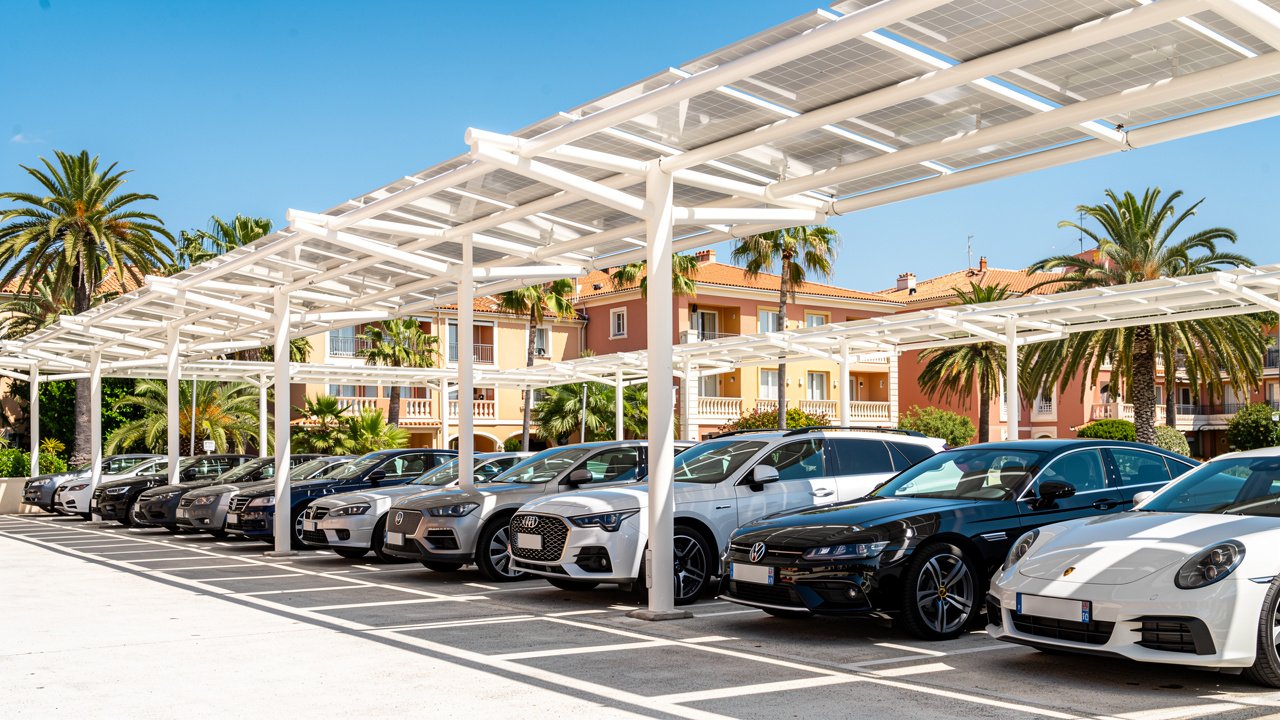
Hotel, retail, and municipal parking solar canopies along the Nice–Cannes corridor match strong solar resource with large paved areas. The French state now steers new PV toward artificial land, parking areas, and suitable agrivoltaic sites, which favors this format — an approach aligned with sectorial pathways to achieve net-zero targets that emphasize deploying solar on built and degraded surfaces rather than greenfield land. Investors often see portfolios of car park roofs tied to long leases with public or corporate hosts.
Brownfield ground-mount PV on industrial land, disused sites, and logistics zones plugs into national support schemes. Data from ADEME, the French energy agency, show steady growth in PV capacity on such artificial surfaces. These projects require normal French permitting but avoid the most sensitive agricultural and heritage issues, and achieving net-zero in comparable developed economies shows that clustering brownfield and industrial-site renewables delivers measurable sectoral GHG reductions without land-use conflict.
Thalassothermy and coastal temperate water loops around large tertiary buildings in places like Nice create Monaco-style seawater networks at a larger scale. Hospitals, shopping centers, and conference venues seek lower-carbon cooling, and coast-proximate loops offer that without classic district heating infrastructure.
PV combined with storage for industrial and tertiary sites appears in more business plans as French grid tariffs evolve. These projects often sit within SAS structures and can be aggregated into portfolios that family offices and specialist funds find attractive.
Offshore wind, by contrast, remains a state tender market farther west in the Mediterranean, where large sponsors, grid companies, and national agencies work together. That space does not match the early-stage or mid-scale capital model that Monaco Business Angels focuses on.
How Monaco Business Angels Connects Capital To This Emerging Opportunity

Monaco Business Angels sits in the middle of this emerging renewable energy opportunity by design. The network links high-net-worth individuals, family offices, and seasoned angels with founders who understand the specific legal, funding, and technical constraints of Monaco and the French Riviera.
For investors, the appeal starts with curation. Rather than cold inbound pitches, Monaco Business Angels filters environmental and climate-tech projects through sector fit, regulatory readiness, and financial clarity. Deals in rooftop PV portfolios, seawater loops, or PV plus storage reach the network only after an internal review of permits, corporate structures, and grid or subsidy assumptions. That matters in a region where a missing SMEG convention or a weak SAS shareholder agreement can delay cash flows.
The KYC-compliant framework is another anchor. Every investor and founder passes through verification that aligns with Monaco’s financial norms and French AML rules. According to guidance from the Autorité des Marchés Financiers, clear classification of professional and non-professional investors is key for structured offerings, and Monaco Business Angels builds that into its onboarding.
For founders, the value runs deeper than capital size. Renewable energy projects in this region often carry long payback times and require comfort with technical and regulatory risk. The Monaco Business Angels network includes people with backgrounds in wealth management, real estate, data centers, maritime services, and finance, so founders gain both funding and practical advice on contracts, counterparties, and exit paths.
Two public comments pushed my own thinking in this direction:
“Clean energy is moving faster than many people realize.”
Fatih Birol, Executive Director at the International Energy Agency
“Monaco must act as a laboratory for sustainable development.”
Prince Albert II of Monaco, Head of State
Monaco Business Angels turns those ideas into concrete next steps by giving investors verified access to this regional pipeline and giving founders a credible entry into Monaco’s financial community.
Applications And Next Steps: How To Engage With The Monaco And French Riviera Renewable Energy Pipeline
Once the opportunity feels real on paper, the next question is simple. How do founders and investors actually plug into this Monaco and French Riviera renewable pipeline through Monaco Business Angels?
For founders, the strongest applications share a few traits:
The project fits one of the realistic archetypes for Monaco or the Riviera, such as rooftop PV, car park solar, seawater loops, or PV plus storage on tertiary sites.
The team explains the permit path in plain language, whether that means Monaco urban planning files with architect signatures or French environmental and grid approvals.
Financial models show a balanced mix of self-consumption, subsidy support, and utility purchase of excess energy instead of relying on an abstract wholesale price forecast.
Founders who gain the most traction also show a clear legal structure. In Monaco that can mean a SAM or SARL for building ownership, combined with SMEG contracts and clear rights to rooftop surfaces. In France it usually means an SAS that can take in convertible instruments and preferred shares. In both cases, Monaco Business Angels looks for readiness to work with legal counsel across both jurisdictions.
For investors, the first step is membership in the Monaco Business Angels network. That process sets out investment capacity, sector preferences, and risk appetite, then aligns those with the deal flow in climate-tech and environmental projects. Co-investment tickets start around €10K, which lets individual investors join larger allocations beside family offices and institutional partners.
After that, the rhythm is simple. Curated deals arrive with clear term sheets, legal notes, and key regulatory points already surfaced, so investors spend their time judging project quality instead of trying to navigate local rules from scratch.
The Opportunity Is Early And That Is Precisely The Point
When I line up all of this research, one idea stands out. Monaco and the French Riviera form a young but very specific renewable energy field, shaped by building stock, seawater, parking areas, and dense capital.
Policy targets from the Government of Monaco and the French state, existing renewable capacity in Provence-Alpes-Côte d’Azur, and the legal structures on both sides of the border now support that field. The opportunity feels early in the sense that many portfolios and loops are still on drawing boards, not yet in operation.
For investors and founders who want to move before the market feels crowded, that timing is exactly the appeal. Connecting with Monaco Business Angels turns that early picture into actual deal discussions inside a trusted network that knows the Principality and the French Riviera from the inside.
Frequently Asked Questions
This section answers the questions I hear most often when people look at renewable energy investments in Monaco and the French Riviera. Each answer stands on its own, so it can be read without the rest of the article.
Question 1: What Types Of Renewable Energy Projects Are Realistically Investable In Monaco Given Its Geographic Constraints?
The realistic Monaco projects are building-integrated. Rooftop PV, seawater heat pump loops, behind-the-meter storage, and broader building electrification with grants fit local policy and space limits. Large onshore wind, utility-scale solar, and most marine energy concepts do not match the Principality’s territory, heritage protections, or marine rules.
Question 2: What Legal Structures Are Most Commonly Used For Renewable Energy Investments Across Monaco And The French Riviera?
In Monaco, larger ventures often use the SAM company form, while smaller vehicles may use SARL structures. On the French Riviera, the SAS dominates because it allows flexible shareholder agreements and convertible instruments. Cross-border holdings sometimes sit in separate entities to support tax treatment and clearer exits.
Question 3: How Does Monaco Business Angels Vet Renewable Energy Investment Opportunities Before Presenting Them To Investors?
Monaco Business Angels runs a multi-step review that covers financial models, legal status, permits, and market logic. Sector specialists check that each project fits real Monaco or Riviera archetypes. Only KYC-compliant, investment-ready climate-tech and energy deals reach the wider investor network for consideration.
Question 4: What Funding Support Mechanisms Exist For Renewable Energy Projects In Monaco?
Monaco’s 2021 environmental code amendments created an aid scheme for photovoltaic production, with SMEG publishing tariffs for metering and excess energy purchase. The Mission pour la Transition Énergétique also offers grants for audits, insulation, and collective heat pump systems. Most projects blend these supports with self-consumption savings.
Question 5: Can International Investors Based Outside Monaco Participate In Regional Renewable Energy Deals Through Monaco Business Angels?
Yes. Monaco Business Angels welcomes international high-net-worth investors and family offices. Co-investment structures can bridge Monegasque and French law, with minimum entries from around €10K. All investors go through thorough KYC checks so that cross-border participation fits Monaco’s financial standards and European regulatory expectations.