
Table of Contents
- Note from the EditorWe are actively seeking financing and strategic investors who recognise the rapidly growing global demand for digital infrastructure—and the responsibility to make technological progress more compatible with our environment.
- Introduction
- Why AI Is Pushing Traditional Data Center Cooling Past Its Limits
- Why France Is the Right Market for This Investment
- The Portfolio: 24 Financing-Ready Projects in France and a Second Stage in Poland
- What Eco-Efficient Performance Actually Means – And What Evidence Investors Should Demand
- How Monaco Business Angels Connects Qualified Investors to This Opportunity
- The Bottom Line
- Frequently Asked Questions
Note from the Editor
We are actively seeking financing and strategic investors who recognise the rapidly growing global demand for digital infrastructure—and the responsibility to make technological progress more compatible with our environment.
This opportunity is about more than financing data centres. It is about supporting a new generation of infrastructure designed to use energy more intelligently, reduce reliance on traditional cooling, conserve water and transform recovered heat into a valuable local resource.
We invite qualified investors, infrastructure funds, family offices, energy partners and technology groups to join us in scaling a commercially relevant solution to one of the digital economy’s most urgent environmental challenges.
— Sylwia Kaminska
Monaco Business Angels
Introduction
Runaway growth in electricity and computing demand from artificial intelligence (AI), cloud services, and high‑performance computing (HPC) is forcing data center designs to change. Immersion-cooled data centers in France and Poland stand out as attractive sustainable infrastructure because they combine low‑carbon power, efficient cooling, and strong AI demand. When these facilities use immersion cooling, they deliver far more compute per megawatt while cutting energy waste and water use. A portfolio of immersion cooling data centers France with 24 sites ready in France and a planned 20 in Poland turns this technical shift into a financing‑ready platform.
AI, cloud, and high‑performance computing now push rack power well beyond what air systems can handle at a reasonable cost. For high‑density AI infrastructure, traditional air cooling is reaching both practical and economic limits. Investors who stay focused only on conventional facilities risk backing assets that will struggle with next‑generation GPU loads. Immersion‑cooled projects, by contrast, are designed for dense AI clusters from day one.
The portfolio presented through Monaco Business Angels combines this technical readiness with grid‑aware site selection, strong fiber connectivity, and heat reuse options. The sections below explain why the physics of AI workloads favor immersion cooling, why France and Poland matter, how the 24+20 projects are structured, and what evidence investors should request before committing capital. The global liquid cooling market for data centers was valued at approximately USD 3.9 billion in 2023 and is projected to grow at a compound annual growth rate of over 25 percent through 2030, according to industry analysts.
Key Takeaways
AI workloads change data center physics and create an infrastructure gap. Traditional air systems reach practical limits as racks cross 50 to 100 kilowatts. Immersion cooling keeps performance stable where air becomes costly and unreliable. That difference shapes which assets stay relevant through the AI cycle.
France combines low‑carbon power, strong connectivity, and policy support. Greater Paris already holds most national capacity, and new sites now extend beyond the core. Immersion‑cooled facilities on this grid deliver very low lifecycle emissions.
A 24+20 project pipeline is structured as a repeatable platform. Twenty‑four financing‑ready immersion cooling data centers France projects in France, plus a potential twenty in Poland, form a scalable platform rather than isolated assets. Waste heat recovery can add contracted energy revenue on top of compute income. Monaco Business Angels acts as a verified entry point into this program for qualified investors.
“For AI-focused investors, cooling strategy now matters as much as power contracts, land, and fiber routes.” — Monaco Business Angels
Why AI Is Pushing Traditional Data Center Cooling Past Its Limits
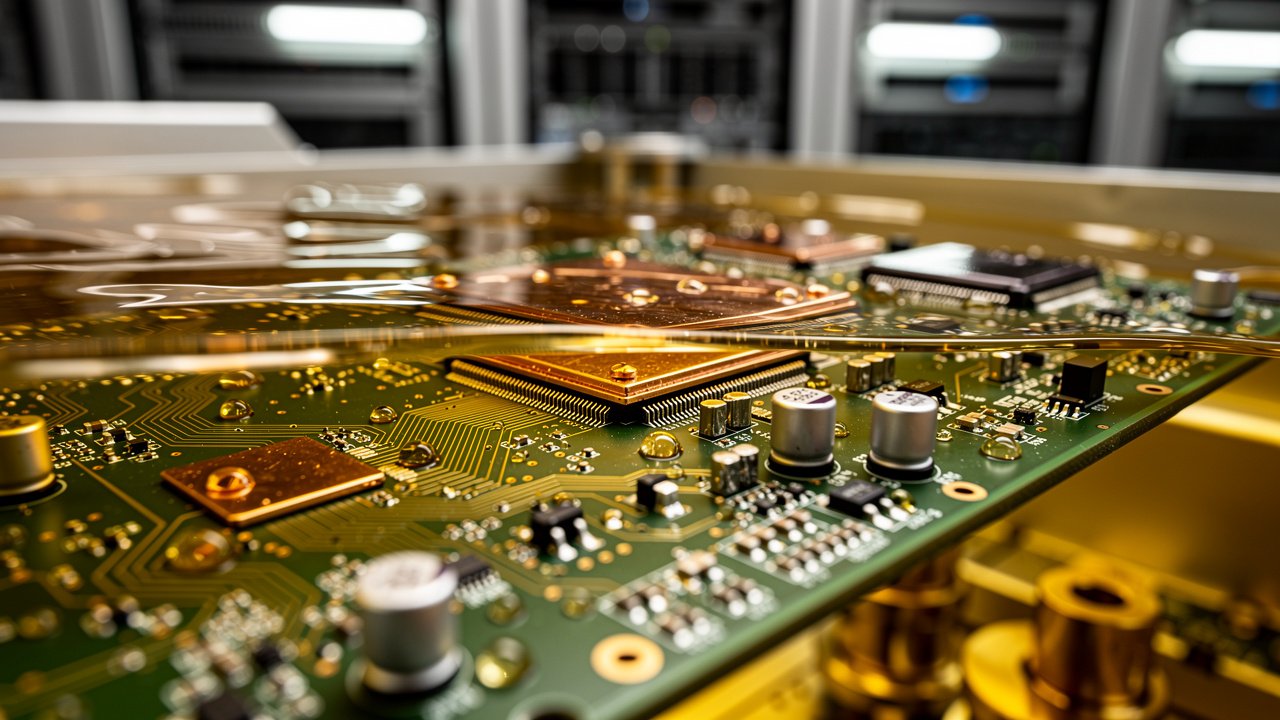
AI is pushing traditional data center cooling past its limits by concentrating far more power and heat into each rack than air systems were built to handle. Research on AI-focused HPC Data Centers shows that GPU clusters for large language models, vision systems, and high‑performance computing now drive sustained rack loads above 80 to 100 kilowatts. At those levels, air‑based cooling becomes both technically fragile and very expensive to operate.
According to the International Energy Agency, global data center electricity use may more than double from around 415 terawatt‑hours to roughly 945 terawatt‑hours by 2030, largely because of AI and accelerated computing. That future is not only about building more halls and shells. It is about finding enough grid capacity, cooling, and land in locations that regulators and communities accept.
Conventional data centers rely on server fans, computer room air conditioners, and raised‑floor airflow. Those systems often consume 35 to 40 percent of a facility’s total electricity before a single GPU from Nvidia or AMD does any useful work. As densities rise, operators must add more chillers, more fans, and more redundancy, which drives Power Usage Effectiveness (PUE) toward numbers that many ESG investors now find hard to support. The average global data center PUE stood at approximately 1.58 in 2023, according to the Uptime Institute’s annual survey, meaning that for every 1 watt of IT load, an additional 0.58 watts was consumed by cooling, power distribution, and other overhead.
At higher rack loads, operators also face thermal runaway risk, noisy environments, and pressure to curtail during grid stress events. This is why immersion cooling is moving from experiment status into a core design option. For dense AI infrastructure, it is increasingly the only practical way to keep chips within safe temperatures while keeping the power bill, and the carbon profile, under control. Air cooling alone is hitting its practical and economic limits for high‑density AI infrastructure.
From Air Cooling to Immersion Cooling – How the Technology Actually Works
The shift from air cooling to immersion cooling replaces moving cold air with a bath of non‑conductive liquid around the hardware. In single‑phase immersion, servers sit inside a tank filled with dielectric fluid that never boils. Pumps move the warm liquid through a heat exchanger, cool it, and send it back, keeping temperatures stable with fewer moving parts.
Two‑phase immersion uses a fluid that boils at chip surfaces, then condenses on a cooled surface above the hardware before flowing back. This design can move heat even faster but relies on sealed tanks, which makes maintenance more involved. Direct‑to‑chip cold plate systems sit between these approaches, cooling specific components but leaving the rest of the board in air.
In simple terms:
Air cools the room and relies on many fans.
Direct‑to‑chip cools only the hottest components on each board.
Immersion cools the entire server by submerging it in a heat‑friendly liquid.
According to research summarized by Lawrence Berkeley National Laboratory, immersion systems can reach PUE levels near 1.05 to 1.10, compared with typical air‑cooled sites close to 1.5 or higher — a performance advantage further supported by “Multi-Scale Hourly Electrical Load data collected across CPU and GPU systems at the facility level. The ADEME modeling for French facilities found that direct liquid systems outperformed air‑cooled designs across all scenarios. Immersion does not replace every legacy site overnight, but for dense AI clusters it gives operators a practical path to higher power racks without constant mechanical upgrades and with easier heat capture, as demonstrated by studies on Performance improvement of high-density data centers via two-phase liquid immersion cooling. Switching from an air-cooled facility at PUE 1.58 to an immersion-cooled facility at PUE 1.08 represents a reduction in overhead energy consumption of roughly 68 percent, a difference that compounds significantly across a 24-site portfolio.
| Cooling Method | Typical PUE Range | Typical Rack Density | Water Use Pattern | Maintenance Style |
|---|---|---|---|---|
| Air cooling | ~1.4 to 1.6 | 5 to 15 kW | Often high, with chillers | Familiar but space hungry |
| Direct-to-chip liquid | ~1.2 to 1.3 | 30 to 80 kW | Lower than air | Hardware-specific loops |
| Immersion cooling | ~1.05 to 1.15 | 80 kW and above | Can avoid evaporation | Tank-focused, fewer fans |
Many operators will continue to run mixed estates, with air‑cooled halls for standard loads and immersion‑cooled rooms for GPU‑heavy clusters. What changes is that next‑generation AI capacity is far more likely to land in immersion tanks than in traditional raised‑floor rooms.
Why France Is the Right Market for This Investment
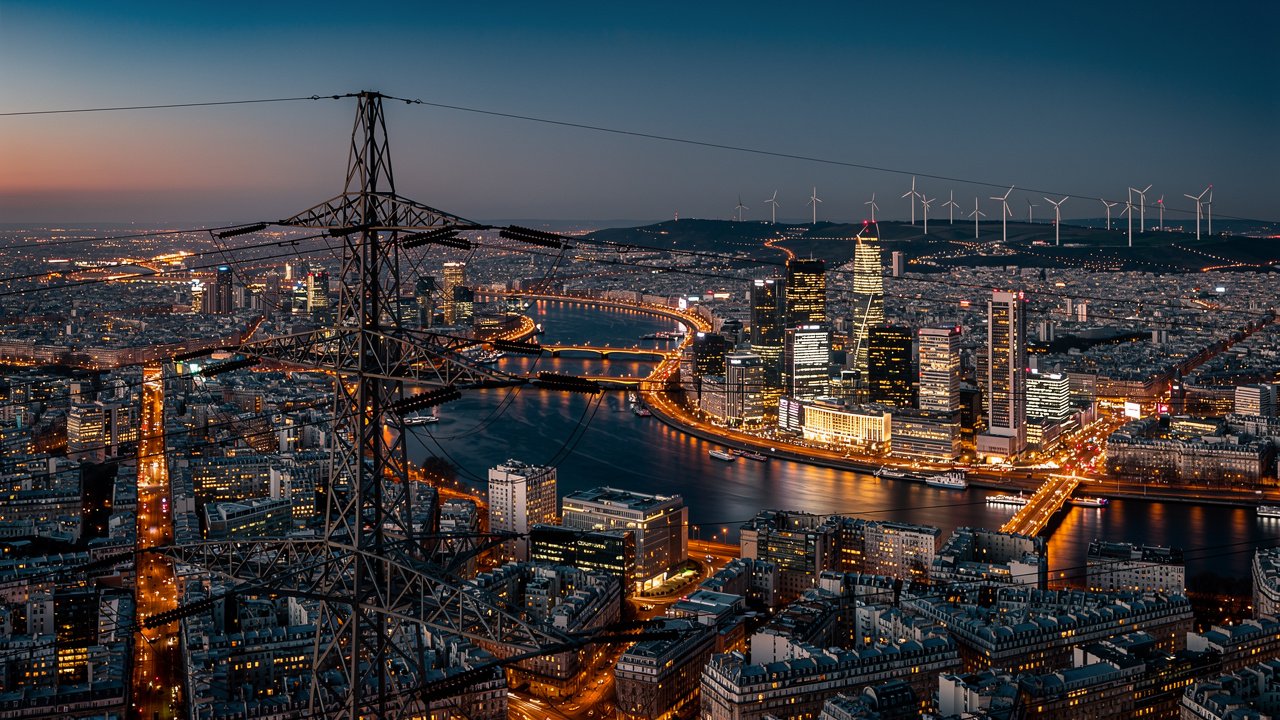
France is the right market for immersion‑cooled data center investment because it combines a very low‑carbon electricity mix with a growing AI and cloud market. In 2025, 95.2 percent of mainland French generation came from nuclear and renewable sources, and direct emissions intensity stood at only 19.6 grams of CO₂ equivalent per kilowatt‑hour, according to RTE. When an immersion‑cooled facility on this grid reaches PUE near 1.1, the resulting carbon footprint per unit of compute is among the lowest available in Europe.
Greater Paris currently holds around three quarters of French data center capacity, helped by deep fiber networks, international cable links, and proximity to major enterprise customers. RTE reports that large dedicated data center connections reached 770 megawatts by the end of 2025 and doubled between 2021 and 2025. At the same time, market data from DC Byte shows pressure on land and power within Île‑de‑France, which is gradually pushing new capacity to secondary zones still tied into strong grids and fiber rings. The French data center colocation market was estimated at approximately €2.1 billion in annual revenue in 2024, with compound annual growth projected above 12 percent through 2028, reflecting rising enterprise and hyperscale demand.
France also leans into AI itself. The Élysée’s AI investment program speaks of roughly €109 billion in proposed private investment in AI infrastructure, computing, and deployment. That policy stance shortens permitting paths for well‑structured projects and makes regional authorities more open to sites that combine efficient cooling, heat reuse, and local energy benefits.
The immersion cooling supply chain in France now includes actors such as AI Green Bytes, which is developing a Paris facility based on single‑phase tanks using Oleon’s plant‑based Qloe fluid. According to Oleon, Qloe is fully biodegradable and non‑toxic, which adds an extra environmental angle on top of energy savings. This kind of domestic supply chain strengthens the case for long‑term, sustainable AI infrastructure anchored in France.
Waste Heat Recovery – Turning An Operational Cost Into a Revenue Stream
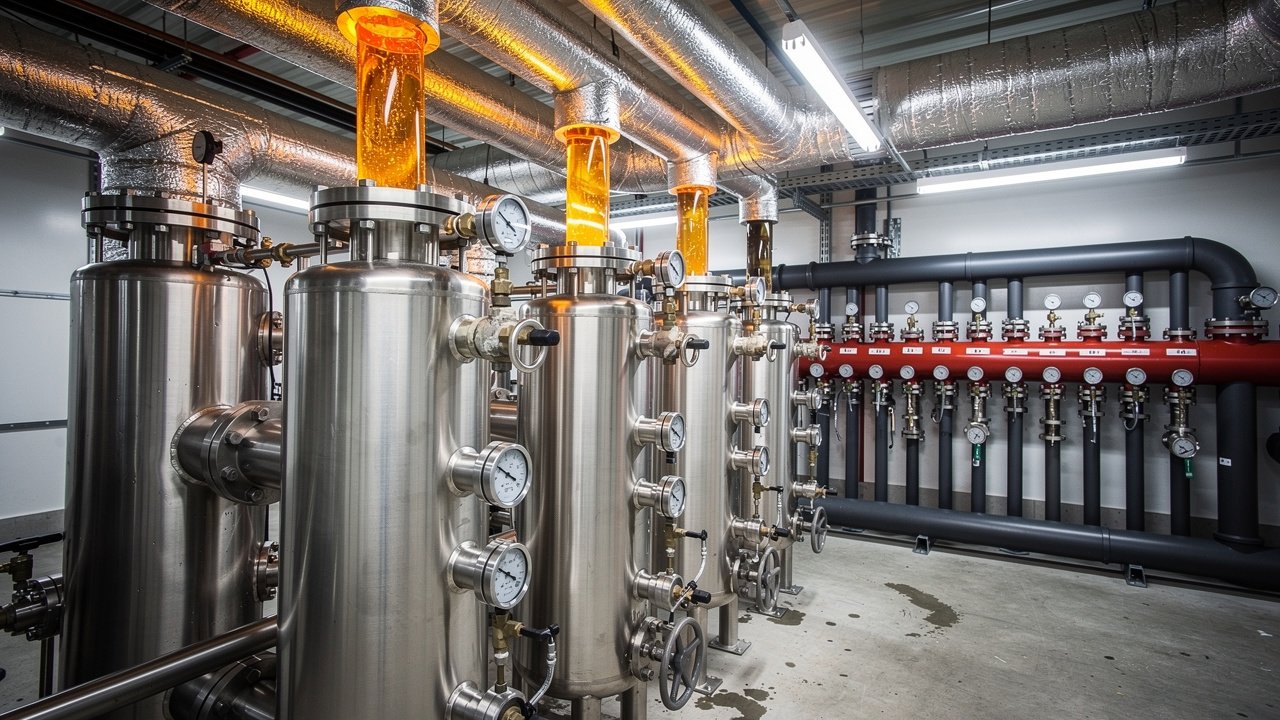
Waste heat recovery in French immersion‑cooled data centers turns what used to be a pure expense into a potential energy product. Because immersion systems gather heat in liquid at higher, more stable temperatures, they hand that energy to heat exchangers in a form that district networks and buildings can actually use, a principle validated by research into the Integration of open natural circulation systems applied to single-phase immersion cooling of data centres. This matches a fast‑changing policy scene around heat reuse.
“Waste heat is an energy resource, not a liability, when projects are planned with offtakers from day one.” — Monaco Business Angels
The City of Paris already pipes waste heat from a data center to help warm the Butte‑aux‑Cailles swimming pool, avoiding roughly 45 tonnes of CO₂ each year. New EU rules now require qualifying data centers to report energy and water indicators, while French law asks sites above 1 megawatt to recover and use their heat unless a technical and economic study proves this is not feasible, according to the European Commission. That changes how investors view location choices and anchor customers. Studies suggest that well-integrated waste heat recovery systems can supply between 30 and 60 percent of nearby district heating demand during winter months, adding a meaningful second revenue stream to data center operations.
District and municipal heating networks can absorb steady streams of waste heat. Immersion cooling helps deliver that heat at useful temperatures for much of the year. Long‑term offtake contracts with network operators can support stable revenue. They also help local authorities view the project as an energy asset, not just a large electricity user.
Real estate and public facilities, such as housing, hospitals, and pools, can use data center heat for domestic hot water and space heating. When a developer pairs an immersion site with nearby buildings, the cooling system becomes part of a local energy loop. That alignment can support smoother permitting and opens the door to blended infrastructure financing.
Greenhouses and light industry often need low to medium temperature heat for steady operations. Immersion‑cooled data centers can match those profiles over long horizons. For investors, these clients bring predictable demand and can anchor multi‑year or multi‑decade supply contracts that sit alongside compute revenue.
The Portfolio: 24 Financing-Ready Projects in France and a Second Stage in Poland
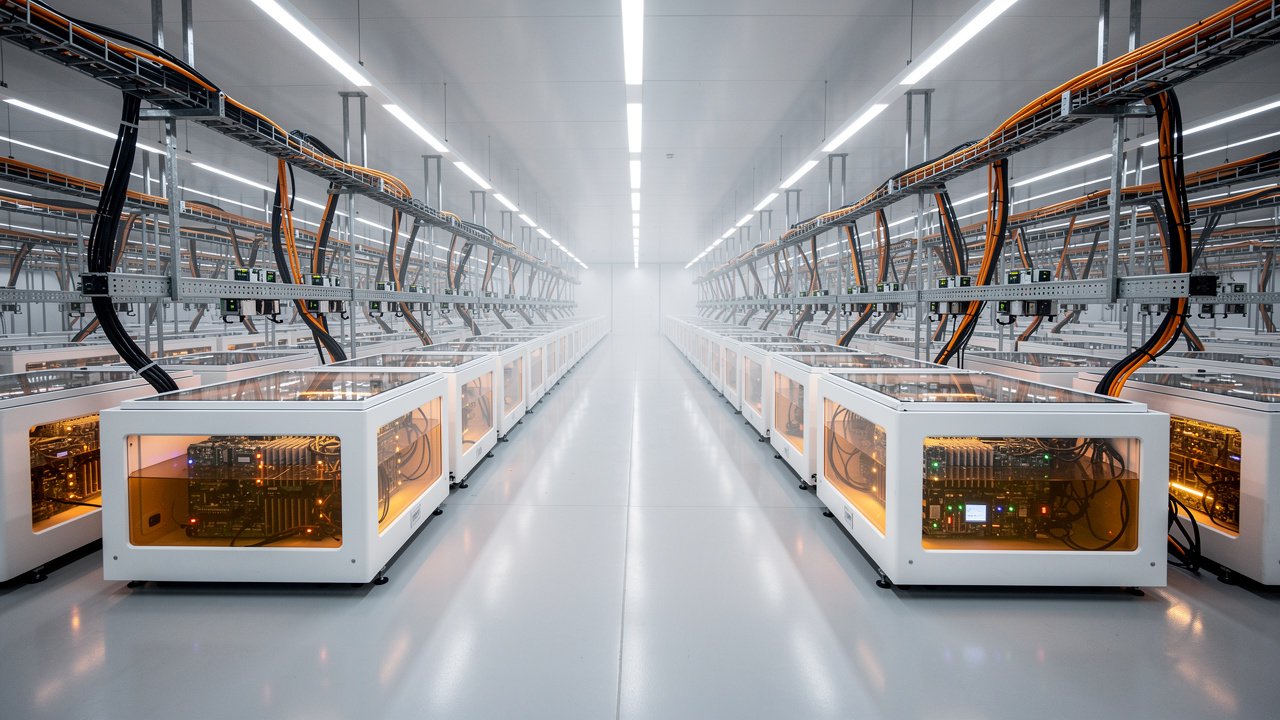
The current portfolio centers on 24 immersion cooling data centers France projects that are ready to enter the financing process, subject to normal investor due diligence. These are not early slide decks. Technical feasibility studies, grid discussions, and immersion‑cooling concepts have already been developed to a level where serious capital can evaluate them.
Alongside the French portfolio sits a proposed second stage of 20 projects in Poland. The idea is simple yet powerful. A first wave of sites in France builds and operates, while one or two Polish demonstrators come online to prove that the same template works in Warsaw and other key zones of the Poland data center market. Once those pilots provide at least 12 months of independently verified results, the larger Polish rollout can follow with a far clearer risk profile. Poland’s data center market has grown rapidly, with total installed IT capacity exceeding 350 megawatts by 2024 and annual growth rates consistently above 15 percent, driven by nearshoring trends and EU digital investment programs.
The French sites focus on locations where grid capacity, fiber connectivity, and potential heat users line up. Several are oriented toward high‑density AI and high‑performance computing facilities, where immersion cooling technology offers the most value. Others lean into modular data centers that can grow in phases while keeping PUE and water use under control.
For investors from regions such as the Gulf Cooperation Council, Singapore, South Korea, Japan, China, Hong Kong, and North America, this structure offers something rare. It is a way to build a strategic European position in AI infrastructure across two EU member states, using a repeatable model rather than isolated one‑off projects. The presence of immersion cooling and heat reuse also speaks directly to sustainable infrastructure funds and ESG‑focused mandates.
A Standardized, Repeatable Infrastructure Platform – Not 24 Separate Property Deals
This portfolio is designed as a standardized platform, not as 24 unrelated property bets. Each project follows a shared template that covers power, cooling, commercial structure, and environmental performance. That platform logic is what makes the program interesting for infrastructure funds and large private investors.
Power, grid connections, land, and fiber follow a clear pattern. Sites are chosen where transmission or distribution capacity is realistic, land control is secured, and local planning rules are understood early. Grid connection studies and RTE liaison form part of the upfront package, and fiber availability and latency to Paris and regional hubs are assessed alongside power. Investors see a repeatable playbook instead of reinvented processes on every plot.
Technology choices are coordinated across the platform. Single‑phase immersion tanks, fluid chemistry, and server compatibility are evaluated as families of decisions, not as isolated experiments. Vendors such as Submer, LiquidStack, GRC, or Asperitas can be assessed on a portfolio basis. That supports common spare parts, training, and monitoring systems.
Commercial and heat-offtake models follow shared patterns. Customer agreements for AI capacity, colocation services, or GPU‑as‑a‑service are designed with similar structures. Heat buyers, such as district networks or building owners, sign offtake contracts that align across the portfolio. Documented operator demand from AI cloud providers and enterprise tenants is handled in comparable ways, with similar contract lengths and service levels. This approach supports portfolio‑level financing, where lenders and equity investors can underwrite one platform rather than many small projects.
For the proposed 20‑project Poland expansion, the same principles apply. One or two Warsaw data centers and perhaps a regional site would act as demonstrators. Once those have a track record on PUE, availability, and heat reuse, scaling across the rest of Poland becomes a matter of repetition instead of reinvention.
What Eco-Efficient Performance Actually Means – And What Evidence Investors Should Demand
Eco‑efficient performance for immersion cooling data centers France projects means measurable gains in PUE, water use, carbon intensity, and heat reuse, not just good intentions. For a 10 megawatt IT load running at 90 percent utilization, every 0.10 reduction in PUE saves about 7,884 megawatt‑hours of electricity per year, according to calculations derived from the ADEME cooling study. Across a 24‑site portfolio, even modest PUE gains translate into very large lifetime savings and higher effective compute density per megawatt of grid capacity.
“Treat PUE, water use, and heat recovery as line items in the financial model, not just engineering specifications.” — Monaco Business Angels
That same study modeled air‑cooled French facilities at PUE levels around 1.36 to 1.39, while advanced liquid systems reached far better values. Research from ASHRAE and Lawrence Berkeley National Laboratory also highlights immersion cooling and direct liquid systems as strong options for high‑density racks, with the added benefit of easier heat capture. Warm‑water rejection through dry coolers can sharply reduce evaporative water demand and cooling electricity costs, as quantified by an Experimental study on jet-enhanced immersion liquid cooling demonstrating measurable energy efficiency gains in data center environments. Immersion cooling also significantly reduces water consumption: conventional air-cooled data centers using evaporative cooling towers can consume 1.8 to 2.5 liters of water per kilowatt-hour of IT load, whereas closed-loop immersion systems with dry coolers can reduce that figure by more than 90 percent in favorable climates.
For investors, the key message is straightforward. Do not treat eco‑efficiency as a label. Treat it as a set of audited numbers and engineering choices that flows directly into operating margins. Serious projects should be willing to open those numbers to diligence teams and funding partners.
PUE should be measured, not only modeled. Investors should see hourly or monthly curves over at least twelve months of steady operation, not only design targets. Values near 1.1 in France, combined with the low‑carbon grid, signal that the site delivers real environmental gains.
Water performance needs clear data. Cooling designs that rely on dry coolers or very limited evaporation deserve attention in regions under water stress. Projects should present modeled and later measured water use, backed by engineering firms that lenders recognize.
Hardware and fluid compatibility must be documented. Operators should present statements from OEMs on GPU and server warranties in immersion, plus laboratory results on fluid life and material impact. Plant‑based chemistries similar to Qloe gain points on toxicity, but their long‑term behavior must still be tracked.
Heat-offtake and grid status need named counterparties. Investors should see signed or draft contracts with district heating companies, building owners, or greenhouse operators, along with connection letters or studies from grid operators such as RTE. These documents turn good concepts into believable future cash flows.
Investment Risks and How to Evaluate Them
Investment in immersion‑cooled data centers brings real risks, even when the opportunity looks attractive. Naming those risks plainly is the first sign of a serious platform. Investors should look for teams that address concerns upfront instead of smoothing them away.
Capital intensity remains high. Immersion tanks, dielectric fluids, and custom heat exchange systems cost more up front than standard air‑cooled halls. Modular designs and phased builds can spread spending, yet the initial envelope still needs strong balance sheets or patient equity. Lenders will look hard at coverage ratios and long‑term contracts.
Fluid and hardware alignment is still a live topic. OEM warranty language for submerged GPUs and servers is evolving. Plant‑based liquids reduce environmental concern but have shorter operating histories than mineral oils. Due diligence should include independent lab reviews and direct discussions with vendors such as Nvidia, AMD, and major server suppliers.
Operations require new skills. Even single‑phase immersion introduces new maintenance habits, from lifting wet servers to handling fluid logistics. Two‑phase systems add sealed chambers and more complex procedures. Investors should expect to see training plans, partnerships with firms like Vertiv or Schneider Electric, and contingency processes for leaks or fluid replacement.
Industry standards are still emerging. There is no single global rulebook for immersion tank design, fluid chemistry, and long‑term monitoring. That creates uncertainty yet also room for early movers. Monaco Business Angels screens projects for realistic timelines and honest technical milestones before they reach its investor network.
Energy pricing and regulation can shift. Rising electricity prices, changes to capacity markets, or new local restrictions on data centers may affect margins or project timelines. Serious projects should present sensitivity analyses on power prices, grid curtailment, and compliance with French and EU rules on energy efficiency and heat reuse.
How Monaco Business Angels Connects Qualified Investors to This Opportunity

Monaco Business Angels connects qualified investors to this immersion cooling platform through a KYC‑compliant, curated network based in Monaco. The organization focuses on verified, financing‑ready deals, and the 24 French projects with a potential 20‑project Polish expansion sit squarely within that mandate. Investors gain exposure to AI infrastructure without needing to assemble their own project pipeline from scratch.
The platform serves high‑net‑worth individuals, family offices, and institutional investors across Europe, North America, the Gulf, and Asia. Co‑investment structures can start around €10,000 while also welcoming far larger checks from infrastructure funds and sovereign investors. Legal safeguards and strict compliance help both investors and founders move through French and European regulation with greater confidence. European data center infrastructure deals attracted more than €15 billion in private investment in 2024, according to CBRE, reflecting growing institutional appetite for digital infrastructure assets with long-term contracted cash flows.
For project developers, Monaco Business Angels provides more than capital introductions. Its community brings experience in data center operations, real estate, energy, and technology investing. That mix supports sound financial structuring, realistic construction schedules, and measured go‑to‑market plans for AI and cloud customers.
Curated deal flow means each immersion project passes internal screening before investors see it. Technical advisors review grid access, cooling design, expected PUE, and heat reuse concepts. This saves investors time and filters out early‑stage ideas that are not yet ready for institutional dialogue.
Structured co-investment vehicles let different investor types sit alongside each other. A family office from Monaco, an asset manager from London, and a strategic investor from Dubai can share exposure to the same French or Polish assets. This approach widens the capital base while keeping governance clear.
Ongoing mentorship supports founders as projects pass from design into construction and operation. Monaco Business Angels helps teams prepare lender packs, negotiate with technology vendors such as Submer or LiquidStack, and respond to ESG questions from large allocators. That support benefits all capital providers tied to the platform.
Why This Opportunity Fits Multiple Investor Profiles
This immersion cooling data centers France platform speaks to several investor groups at once. Each group sees something slightly different in the same underlying assets. A single standardized design can still answer multiple strategies.
Infrastructure funds and sovereign investors from the UAE, Saudi Arabia, Qatar, South Korea, Japan, and Singapore see long‑duration assets with contracted power and heat sales. The low‑carbon French grid supports green bond frameworks and ESG reporting. A second‑stage Poland expansion adds geographic spread across the EU, which can appeal to funds seeking regional balance.
Technology investors and data center operators from the United States, Canada, the United Kingdom, and China gain a structured entry point into an immersion‑heavy market. Co‑investment with the platform offers visibility on AI customer demand, GPU procurement, and operations at European energy prices. They can also test vendor stacks for possible use in their own estates.
Family offices and angel investors based in Monaco and across Europe access verified deal flow without building large in‑house teams. Monaco Business Angels handles KYC, legal structure, and documentation. Investors can commit tickets that match their risk appetite while sharing exposure to AI infrastructure with a broader group.
Founders and project developers in cooling technology, AI cloud services, or green chemistry gain access to this capital pool. Working with Monaco Business Angels gives them strategic feedback on business models and financing terms. That support increases the chance that strong technical ideas reach bankable, buildable projects.
The Bottom Line
France’s next wave of immersion‑cooled data centers presents a rare alignment of AI demand, low‑carbon electricity, and financing‑ready projects. The 24‑site French portfolio, supported by a potential 20‑project expansion in Poland, offers investors a way to back dense, eco‑efficient AI infrastructure through a standardized platform rather than isolated bets. Waste heat recovery, when combined with France’s policy framework, can turn cooling into a second energy product.
Immersion cooling is no longer a lab experiment. Studies from ADEME, ASHRAE, and Lawrence Berkeley National Laboratory show clear gains in PUE, water use, computing density, and heat capture for high‑density racks. The key is to focus on measurable performance, thoroughly reviewed designs, and real contracts, not just marketing claims. As with any infrastructure strategy, returns will depend on execution quality, contract structure, and the path of energy markets.
Monaco Business Angels invites qualified investors, infrastructure funds, family offices, energy partners, and strategic operators to request a confidential introduction to this financing‑ready portfolio. Through its KYC‑compliant network and sector expertise, the organization provides a structured path into immersion cooling data centers France opportunities in both France and Poland.
Frequently Asked Questions
What is immersion cooling and how does it differ from traditional air cooling?
Immersion cooling submerges entire servers in a non-conductive dielectric fluid that absorbs heat directly from components and carries it away through a heat exchanger. Unlike traditional air cooling, which relies on fans and chillers to move cold air around equipment, immersion cooling surrounds the hardware completely. This allows rack densities of 80 kilowatts and above, compared with just 5 to 15 kilowatts for typical air-cooled racks, and achieves PUE values as low as 1.05, far below the global air-cooled average of approximately 1.58.
Why are France and Poland attractive locations for immersion-cooled data center investment?
France offers a uniquely low-carbon electricity grid, with 95.2 percent of generation from nuclear and renewables in 2025 and an emissions intensity of just 19.6 grams of CO₂e per kilowatt-hour according to RTE. This means immersion-cooled facilities can deliver some of Europe’s lowest carbon footprints per unit of compute. France also benefits from strong fiber connectivity, a supportive AI policy environment including €109 billion in proposed private AI investment, and legal requirements for heat reuse at data centers above 1 megawatt. Poland complements France with a rapidly growing digital market, EU membership, and data center capacity exceeding 350 megawatts and growing above 15 percent annually, offering geographic diversification within the same platform model.
What financial returns can investors expect from immersion-cooled data center projects in France?
Returns depend on execution quality, contract structure, and energy market conditions, but the structural drivers are strong. Immersion cooling reduces energy overhead by up to 68 percent compared with standard air-cooled facilities, directly improving operating margins. Waste heat offtake contracts can provide a second revenue stream, with well-integrated systems supplying between 30 and 60 percent of nearby district heating demand. The broader European data center infrastructure sector attracted more than €15 billion in private investment in 2024, with institutional investors targeting long-duration assets offering contracted cash flows similar to other infrastructure categories. Monaco Business Angels can provide project-specific financial models to qualified investors upon request.
What is the minimum investment to access the French immersion-cooling data center portfolio through Monaco Business Angels?
The minimum co‑investment ticket is usually around €10,000, with room for much larger commitments from infrastructure funds and sovereign investors. All investors complete KYC checks before receiving deal materials. Monaco Business Angels can discuss specific ticket sizes and structures during a confidential introductory call.
How does France’s nuclear electricity grid affect the carbon footprint of immersion-cooled data centers?
France’s grid, with 95.2 percent nuclear and renewables in 2025, has an emissions intensity near 19.6 grams CO₂e per kilowatt‑hour, according to RTE. When combined with immersion cooling PUE near 1.05 to 1.10, each computation uses less electricity and far less carbon. This combination gives French sites a strong edge for ESG‑focused investors and supports green bond and sustainable finance frameworks.
What are the main risks of investing in immersion-cooling data center projects?
Key risks include higher upfront capital needs, fluid and hardware compatibility questions, maintenance learning curves, and a lack of full industry standards. Regulatory change and power price volatility also matter. Investors can reduce risk by favoring single‑phase designs where appropriate, demanding independently verified PUE data, and checking OEM warranty language. Monaco Business Angels screens projects on these points before presenting them to its network.
What is the Poland second-stage expansion and how does it relate to the French portfolio?
The Poland expansion is a proposed second phase of around 20 immersion‑cooled projects that follow the same platform model as the French sites. One or two demonstrator facilities in Warsaw or nearby regions would run first to prove performance. Once they show stable results on PUE, uptime, and heat reuse over at least 12 months of independently verified operation, the wider Polish rollout can proceed with lower perceived risk.
Qualified investors, infrastructure funds, family offices, energy partners, and strategic operators who want to explore these projects are invited to contact Monaco Business Angels for a confidential discussion.