
Investors keep asking where money is really moving as the global economy 2026 faces war, inflation and energy risk. In practice, global capital flows in 2026 are concentrating in AI infrastructure, Saudi‑backed gaming and media, Polish consumer platforms, and Monaco and French Riviera real estate. Instead of retreating to cash, institutional investors, sovereign wealth funds and family offices are redirecting toward projects that control power, data, audiences and scarce land.

The IMF now projects around 3.0% global growth in 2026 and 3.4% in 2027, while warning that disinflation has stalled with inflation near 4.7%.[^imf-weo] That split picture favors countries and companies tied to artificial intelligence, resilient energy, and secure consumer platforms, while exposing weaker, import‑dependent economies.
This article explains why capital is concentrating, not disappearing, and how that shapes opportunities in AI infrastructure, Saudi strategy, Poland, Monaco and the French Riviera. It also shows how Monaco Business Angels fits into this picture by connecting verified capital with structured projects. Read on to see what this means in practice for investors, founders, brokers and project owners.
info@monacobusinessangels.com
“Capital is not fleeing risk; it is sorting risk. It is moving away from generic exposure toward specific assets that control power, data and real‑world bottlenecks.” – Internal investment commentary
Key Takeaways
Capital concentration in global capital flows in 2026 favors four asset types that solve real economic bottlenecks rather than speculative themes. Investors reward strategic infrastructure, proprietary technology, scalable platforms and scarce real assets that hold value through inflation shocks.
AI infrastructure investment is moving from software toward physical assets such as power, data centers and cooling systems. Industrial groups like Siemens Energy and Caterpillar are reporting stronger demand linked to data center build‑outs and energy projects that power artificial intelligence.
Saudi Arabia’s Public Investment Fund is using gaming and media deals, including the $55 billion Electronic Arts transaction with Silver Lake and Affinity Partners, to buy intellectual property and global cultural reach. This sits alongside sports, tourism and entertainment projects that project influence as well as returns.
Poland is shifting from a low‑cost outsourcing story to a scalable European platform market. Transactions like Alimentation Couche‑Tard’s proposed $8.7 billion purchase of Żabka, with 13,000+ stores and millions of daily transactions, show that buyers value data and national reach.
Monaco and the wider French Riviera continue to attract global private capital into scarce luxury real estate and structured deals. Monaco acts as a relationship hub where Gulf investors, European families and entrepreneurs meet, and where networks like Monaco Business Angels connect verified investors with curated opportunities.
Why Global Capital Is Concentrating, Not Retreating In 2026
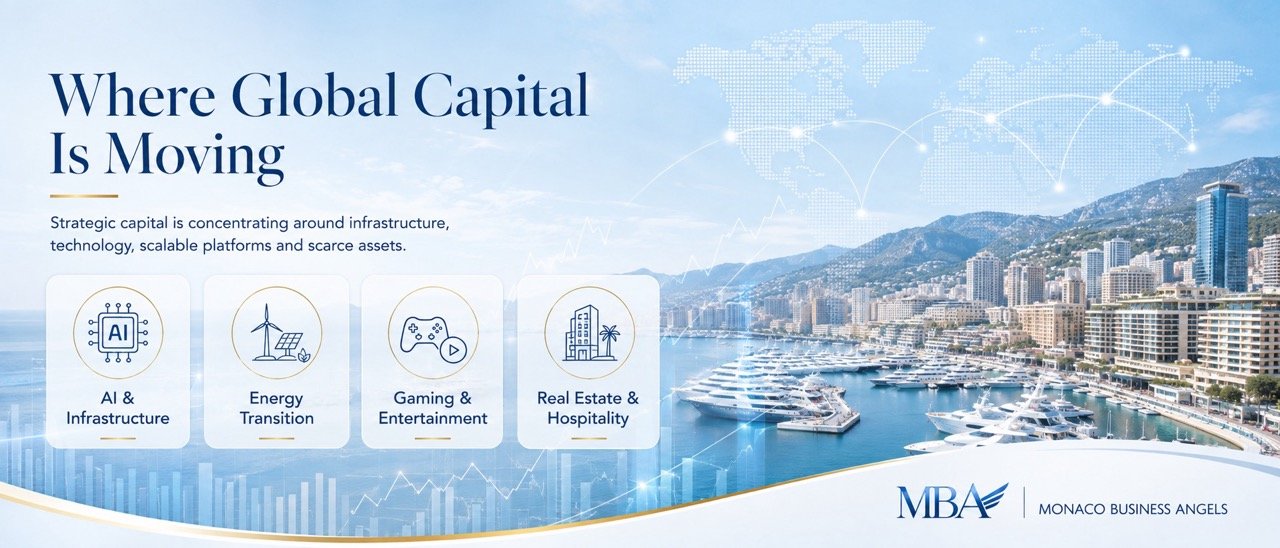
Global capital flows in 2026 are concentrating because growth is uneven and inflation is sticky, so investors favor very specific assets, a pattern reflected in the World Bank’s Global Economic Prospects, June 2026 report, which projects slowing global growth amid an energy price shock. The World Bank’s press release on the Middle East conflict and global growth outlook confirms this same combination of moderate growth and elevated inflation risk, which rewards projects that can pass through prices or control real resources.[^imf-weo] That pulls capital toward a smaller group of countries, sectors and platforms that can set terms rather than accept them.
Under this backdrop, funding is clustering around four advantages:
Strategic infrastructure such as power grids, fiber networks, ports and data centers, which keep economies running when supply chains are shaken.
Proprietary technology and intellectual property, from AI models to gaming franchises, which protect pricing power even when volume is volatile.
Scalable operating platforms that turn local reach and data into regional or global networks.
Genuinely scarce real assets, including prime coastal real estate around Monaco and the French Riviera that cannot be replicated.
Nonbank investors such as pension funds, insurance companies, sovereign wealth funds and private credit funds already hold more than half of global financial assets, and recent IMF research on capital flows to emerging markets shows these players now drive a growing share of cross-border allocation decisions. Research from the IMF and BIS shows that these players now drive a large share of cross‑border flows into emerging markets rather than banks. That shift makes flows more sensitive to global risk sentiment, yet it also channels more money toward deep, transparent markets such as North America and select parts of Europe and the Gulf. For investors in Monaco, Dubai, Saudi Arabia and Poland, understanding this selective behavior is central to reading global capital flows in 2026.
KKR’s $19.2 Billion Infrastructure Fund As A Market Signal
KKR’s latest infrastructure vehicle, closed at $19.2 billion and focused on North America and Western Europe, is a clear signal of where large pools of money want to be. The fund targets energy security, digital infrastructure and upgrades to aging assets, aligning with government priorities across the US, UK, France and Germany.
For project owners, this shows that capital now hunts for infrastructure that solves hard problems, not just offers long‑dated yield:
Power availability near AI clusters
Grid stability for renewables
Port capacity for trade
Fiber routes and data backbones for AI and cloud
Investors comparing global capital flows in 2026 will ask one simple question of any deal: does it relieve a real bottleneck in power, data, transport or logistics, or is it just a slide deck?
How AI Infrastructure Is Becoming A Physical Economy
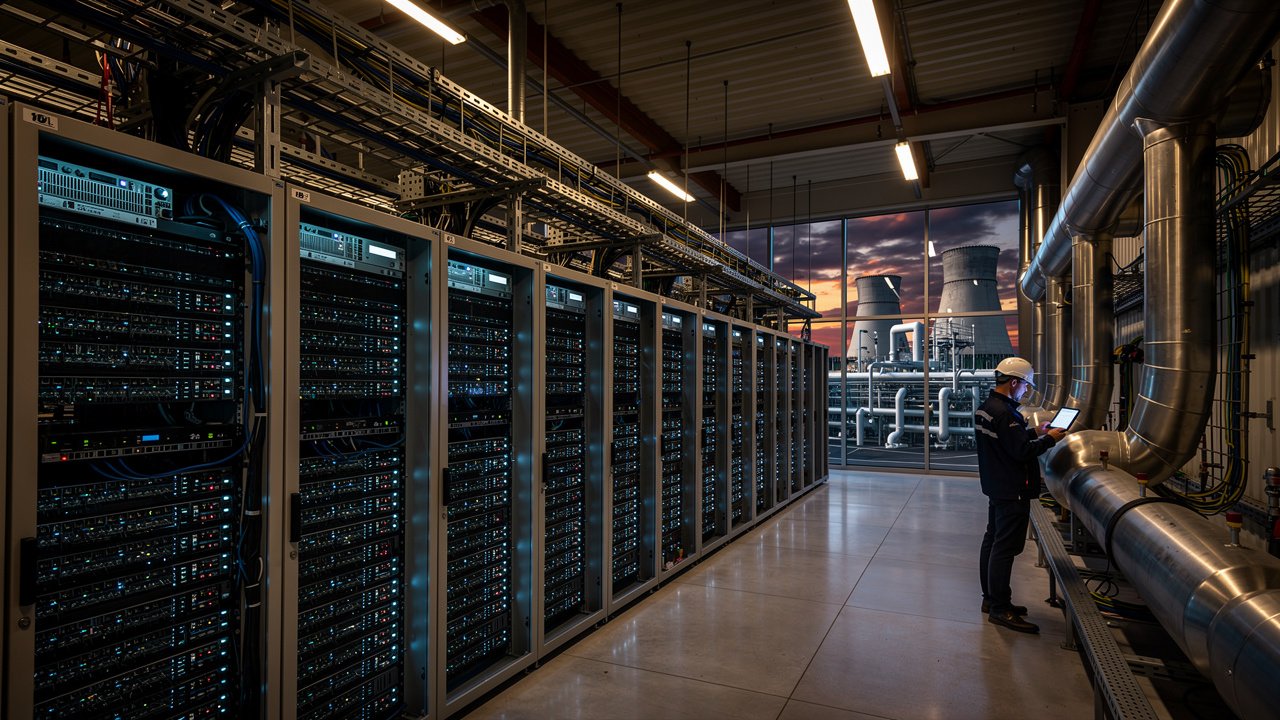
AI infrastructure in 2026 is turning from a pure software story into a heavy, physical investment cycle centered on energy and construction. As estimates of Big Tech’s AI‑related capital expenditure approach $635 billion for 2026, the bottleneck is no longer algorithms, it is electricity, cooling and concrete. That shift is reshaping global capital flows in 2026 toward power projects, data centers and the suppliers that serve them.
Artificial intelligence needs uninterrupted power at scale, resilient data centers, specialized chips and high‑capacity networks. That is why industrial names such as Siemens Energy report record demand for gas turbines linked to AI data centers and Middle Eastern power plants, and why Caterpillar has raised its outlook thanks in part to backup power and construction equipment orders for digital infrastructure. The winners now include utilities, grid developers, engineering companies and construction platforms, not just model builders in California.
For investors from family offices in Monaco or Saudi Arabia to institutional buyers in Europe and North America, this turns abstract AI narratives into project finance questions. Deals must show:
Where the megawatts come from and at what price
How cooling is managed and what technology is used
What the construction timeline looks like, including permitting risk
How contracts allocate risk between developers, operators and tenants
Family offices and private capital are starting to co‑invest alongside infrastructure funds, especially in Europe and the Gulf, where governments want AI‑ready grids and data capacity, a trend consistent with recent findings on geopolitical risk and global capital flows into emerging and developed markets. This is visible from Paris to Warsaw, from Dubai to Riyadh.
What Investors Now Demand From Data Center Projects
Investors now judge data center proposals through a hard operational lens instead of optimistic traffic forecasts. A project that mentions AI or cloud without solid physical fundamentals will struggle to raise meaningful capital. That is especially true for Gulf investors in Europe who compare many proposals at once.
| Sector Element | What Investors Want To See | Practical Questions To Test Readiness |
|---|---|---|
| Site and power | Control of land, grid access and realistic permitting plans around the chosen location | Is land secured, are grid connection rights documented, and what is the credible timeline for local approvals? |
| Design and efficiency | Clear metrics for power usage effectiveness, cooling strategy and cost per megawatt built | How efficient is the design, what contractors will build it, and how does cost per megawatt compare with similar deals? |
| Demand and capital structure | Evidence of tenant interest, pre‑leasing options and a balanced mix of equity, debt and vendor financing | Which tenants or partners are in discussion, what are target lease terms, and how will equity, bank debt and supplier credit sit together? |
Founders and project sponsors who answer these questions precisely stand out in global capital flows in 2026. Those who only reference “strong AI demand” without hard data risk being set aside, especially when competing for capital that could also go into Polish logistics, Saudi gaming, or Riviera real estate.
What Saudi Arabia’s PIF Strategy Reveals About Sovereign Capital

Saudi Arabia’s Public Investment Fund shows how sovereign capital now mixes strategic aims with financial returns in global capital flows in 2026. The fund’s role in the $55 billion take‑private of Electronic Arts, alongside Silver Lake and Affinity Partners, is one of the largest technology buyouts to date. The European Union cleared the deal under merger and foreign‑subsidy rules, underlining its global scale and scrutiny.
This move sits within a broader Saudi investment strategy covering sports leagues, major football clubs, tourism, media platforms and large events. Rather than buying only cash flows, PIF is accumulating intellectual property, global audiences and cultural influence. Gaming fits that plan, because franchises cross borders, build loyal communities and spin off content, events and merchandise.
For founders and advisers in Europe, Poland or Dubai, the lesson is that sovereign investors prefer proven platforms over experimental ideas. They search for companies that already bridge East and West, can localize content for the Middle East and can anchor events in Riyadh, Jeddah, Dubai or Abu Dhabi. In that sense, sovereign wealth funds behave more like strategic buyers than passive funds when allocating within global capital flows in 2026.
What Makes A Gaming Or Tech Company Attractive To Sovereign Investors
Sovereign investors look first at engagement, not code. They want gaming or media companies with:
Large active user bases
Strong session times and reliable retention across key markets
Healthy community metrics and social reach
Recurring revenue is the next filter. Subscriptions, live‑ops monetization and in‑game purchases that show stable per‑user spend are far more attractive than one‑off sales spikes. Recognizable intellectual property, esports potential and the ability to localize content for Arabic‑speaking audiences add further weight.
Finally, sovereign capital prefers platforms that can expand across media, licensing and events, because that multiplies cultural influence as well as financial return. For brokers and founders seeking PIF or Abu Dhabi money via Monaco or Dubai, clear data on audience behavior and monetization is now as important as the product roadmap.
Why Poland Is Emerging As A Strategic European Scale Market
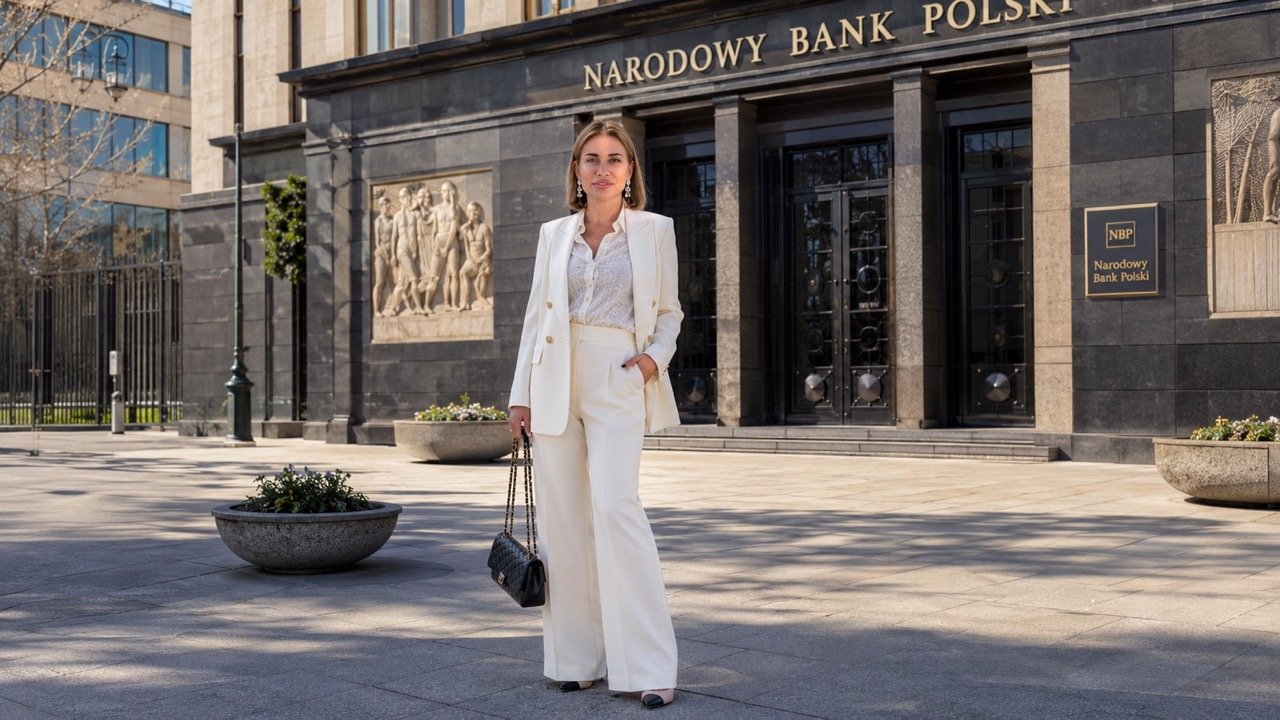
Poland is gaining attention in global capital flows in 2026 as a scale market, not just a low‑cost back office. The proposed $8.7 billion acquisition of Żabka by Canadian group Alimentation Couche‑Tard highlights this shift. Żabka operates more than 13,000 convenience stores across Poland and Romania and processes millions of transactions daily through integrated physical and digital systems.
This kind of realignment mirrors broader disinflation trends, such as the US annual consumer price increase slowing to below 3% in mid-2024, which has reshaped how international buyers value platforms combining national reach, data and operational discipline. Instead of focusing only on wage differences with Western Europe, they look at how a Polish platform can roll out new financial services, loyalty programs or last‑mile delivery across Central and Eastern Europe. The same logic now applies to:
Polish banks with digital distribution and cross‑border ambitions
Solar parks and grid upgrades that support EU energy transition
Logistics parks serving reshoring and nearshoring supply chains
Residential developers in Warsaw, Kraków and Tri‑City building for urban growth
For family offices and institutional investors in Monaco, the Gulf or Western Europe, Poland offers a middle ground between mature Western markets and more fragile emerging economies. Legal and regulatory frameworks keep converging with EU norms, while growth rates and demographic trends still support expansion. That makes Poland an increasingly important node when mapping global capital flows in 2026 across Europe.
What International Buyers Look For In Polish Assets
International buyers studying Polish targets now ask how large the platform already is and how far it can grow. They favor companies with:
Strong brand recognition in their category
Nationwide distribution and efficient logistics
Management teams that run modern systems rather than fragmented legacy tools
They also look for obvious regional expansion paths into neighboring markets such as Czechia, Slovakia or the Baltics. In energy, they want projects that connect clean generation with grid upgrades and solid offtake contracts. In real estate, they pay attention to location, permitting reliability and the depth of local tenant demand. Polish deals presented only as “cheaper than Germany” often lose out to those framed as scalable European platforms.
For Monaco‑based investors and advisers, understanding which Polish assets have regional potential helps prioritize which opportunities are worth deeper due diligence or syndication.
Monaco And The French Riviera As The Bridge Between Capital And Opportunity
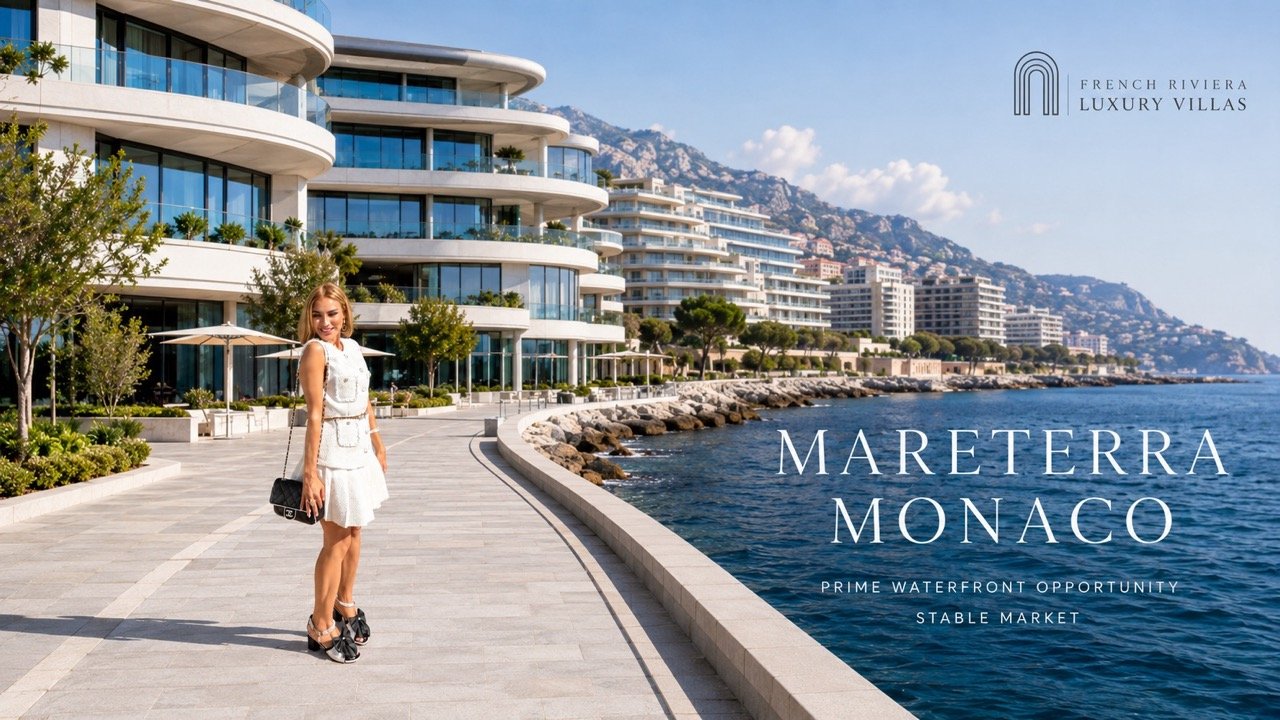
Monaco and the French Riviera matter in global capital flows in 2026 because they connect international wealth with European assets, not because every asset sits inside Monaco’s borders. The principality functions as a dense meeting point for entrepreneurs, family offices, private bankers and Gulf investors who want trusted counterparts. Deals they discuss can relate to data centers in Central Europe, gaming studios in Warsaw or villas near Saint‑Tropez.
Scarce coastal real estate from Monaco to Saint‑Tropez still draws global private capital seeking tangible, inflation‑resistant assets. Supply is physically limited by geography and regulation, while demand comes from the US, the Gulf, Europe and, increasingly, Asia. This supports prime residential and hospitality values even when public markets swing. For many family offices, holding one or two high‑quality Riviera properties alongside financial assets is a long‑term hedge rather than a short‑term trade.
At the same time, many conversations in Monaco now cover AI infrastructure, energy, digital platforms and Polish or Gulf transactions. Private bankers see more clients asking how to co‑invest in data centers, renewable projects or club deals alongside trusted peers. That mix of hard assets and growth platforms makes the region a natural coordination point for global capital flows in 2026, with advisers often shuttling between Monaco, Dubai, Riyadh and Warsaw.
How Monaco Business Angels Structures Trusted Access To This Market

Monaco Business Angels works inside this environment as a curated bridge between capital and founders. It offers high‑net‑worth individuals and family offices vetted access to opportunities in AI‑driven infrastructure, gaming, data centers, sustainable technology, finance and real estate, with minimum tickets starting around €10,000.
For investors, the network provides structured co‑investment options into larger, capital‑intensive projects that would be hard to access alone, such as data centers or development sites along the French Riviera. For founders and project owners, it brings hands‑on mentorship and strategic support from experienced investors who have built and exited businesses in Europe and the Gulf.
A strict KYC and legal framework helps reduce fraud and mandate confusion, which matter more as cross‑border activity with Dubai, Saudi Arabia and Poland increases. In short, the group works to make global capital flows in 2026 safer and more practical for both sides of the table, especially where deals cross currencies and jurisdictions.
Tip for founders: Arrive with a clear structure, not just an idea. Investors in Monaco expect clean ownership, realistic valuations and a defined route to liquidity within a credible timeline.
What This Means For Investors, Founders, And Project Owners
For investors, the current pattern of global capital flows in 2026 means that generic pitches carry little weight. Capital hunts for projects that either:
Sit on top of strategic infrastructure
Control strong intellectual property
Run proven platforms at scale
Own scarce assets such as prime Riviera property
Deals that cannot show one of these traits will face longer fundraising cycles and weaker terms.
Family offices and institutional allocators are also paying closer attention to the quality of counterparties. They expect verified mandates, clear ownership records, transparent fee structures and realistic valuations before sharing sensitive information or term sheets. Brokers and advisers who do not meet this standard risk being screened out early, particularly in tightly networked hubs such as Monaco and Dubai.
For founders and project owners, this environment rewards preparation. Being ready with:
Clean cap tables and shareholder agreements
Audited financials or at least reviewed accounts
Real customer data and unit economics
Detailed project models and risk analysis
is now a minimum requirement. Those who anchor their story in the economic pressures investors already feel, such as power shortages for AI or housing scarcity near Monaco and Warsaw, stand a far better chance of attracting serious interest from family offices and strategic buyers.
Due Diligence Priorities Across AI, Gaming, And Real Estate Deals
Investors now compare deals across sectors using a few simple filters. They want to see how each project behaves under stress, how it handles regulation and how the economics look once optimistic language is stripped away. A practical cross‑sector view helps them screen AI, gaming and real estate on consistent terms.
| Sector | Main Investor Focus | Key Questions Before Committing |
|---|---|---|
| AI and data centers | Secure energy supply, realistic build costs, credible anchor tenants | Where does the power come from, are permits in place, and which users have signed or expressed firm interest? |
| Gaming and tech | Audience depth, monetization, IP control, content localization | How many active users return daily, what share of revenue is recurring, and who owns or licenses the core intellectual property? |
| Real estate (Monaco, Riviera, Poland) | Title security, scarcity value, cross‑border compliance and tax | Is ownership clear, how tight is supply in this location, and are local legal, tax and reporting obligations fully mapped for foreign investors? |
Reading global capital flows in 2026 through these lenses helps investors spot which projects deserve deeper work. It also guides founders and brokers when shaping data rooms and presentations for serious capital providers in Monaco, Europe, Dubai and Saudi Arabia.
The Takeaway
The main message from global capital flows in 2026 is that money is concentrating around infrastructure, intellectual property, scalable platforms and scarce assets. AI infrastructure and data centers tie capital to power, grids and construction groups. Saudi‑backed gaming deals show sovereigns buying influence and IP rather than only financial yield. Poland is stepping forward as a scale market where supermarkets, banks and energy platforms can reach tens of millions of consumers. Monaco and the French Riviera hold their position as trusted ground for structuring deals and holding rare property.
For serious investors, this is a time to be selective, not passive. Focus on projects that solve defined problems in power, housing, logistics, entertainment or financial access. Avoid pitches that rely only on narratives without showing how cash flows survive inflation, rate changes or regulatory shifts. For founders and project owners, align proposals with these themes and come prepared with verifiable data, not just projections.
If you want a structured route into this world, you can apply to join Monaco Business Angels as an investor, subscribe to the newsletter or submit a project for review. Approved investors receive confidential opportunities every week across AI, gaming, data centers, energy, finance, real estate and scalable operating businesses. The group is actively searching for qualified investors and well‑structured projects in Monaco, Europe, Poland, Dubai and Saudi Arabia. We write to connect trusted capital with credible opportunities.
Frequently Asked Questions
Question: What is driving global capital flows in 2026?
Global capital flows in 2026 are driven by moderate growth, persistent inflation and big spending on AI infrastructure. The IMF projects around 3.0% growth with inflation near 4.7%, which favors assets that control power, data and scarce land.[^imf-weo] Investors focus on strategic infrastructure, proprietary technology, scalable platforms and rare real estate instead of broad market exposure.
Question: Why are investors shifting from AI software to physical AI infrastructure?
Investors shift focus because AI models cannot run without power, cooling and data center capacity. Big Tech plans to spend an estimated $635 billion on AI infrastructure in 2026, which lifts demand for turbines, transformers and construction equipment from groups such as Siemens Energy and Caterpillar. This turns AI from a pure software story into a physical build‑out that attracts long‑term capital from infrastructure funds, family offices and sovereign wealth funds in Europe and the Gulf.
Question: Is Saudi Arabia’s Public Investment Fund still actively acquiring Western companies?
Yes, Saudi Arabia’s Public Investment Fund remains an active buyer of Western assets. The recent $55 billion transaction involving Electronic Arts, with partners Silver Lake and Affinity Partners, shows continuing interest in gaming and media. PIF also invests heavily in sports, tourism, events and infrastructure, using capital to gain global audiences, intellectual property and influence, not just financial returns.
Question: Why is Poland attracting more international acquisitions than before?
Poland now attracts more acquisitions because buyers see it as a scale market rather than only a low‑cost base. The proposed $8.7 billion Żabka deal, covering more than 13,000 stores and millions of daily transactions, shows interest in platforms with national reach and strong data. Similar logic supports investment in Polish banks, renewable energy and property developments that can expand across Central and Eastern Europe, including investors coordinating from Monaco, London or Dubai.
Question: How does Monaco compare to other European investment hubs for family offices?
Monaco serves as a relationship and capital headquarters rather than a large physical asset pool. Family offices, private bankers and entrepreneurs meet there to structure cross‑border deals involving France, Poland, Dubai, Saudi Arabia and beyond. Strong private banking, advisory networks and proximity to scarce Riviera real estate make Monaco a preferred base for coordinating global capital flows in 2026 for many high‑net‑worth families.
Question: How can a founder or project owner get access to verified investors through Monaco Business Angels?
Founders and project owners can submit projects through the Monaco Business Angels application process, sharing clear information on team, economics and structure. Shortlisted projects receive feedback and, when suitable, mentorship to prepare for investor review. Qualified investors can join from around €10,000, which opens institutional‑style deal flow to a wider group while keeping KYC and legal checks in place. This offers a practical route to match credible projects in AI, gaming, data centers, energy, finance and real estate with serious capital.
info@monacobusinessangels.com